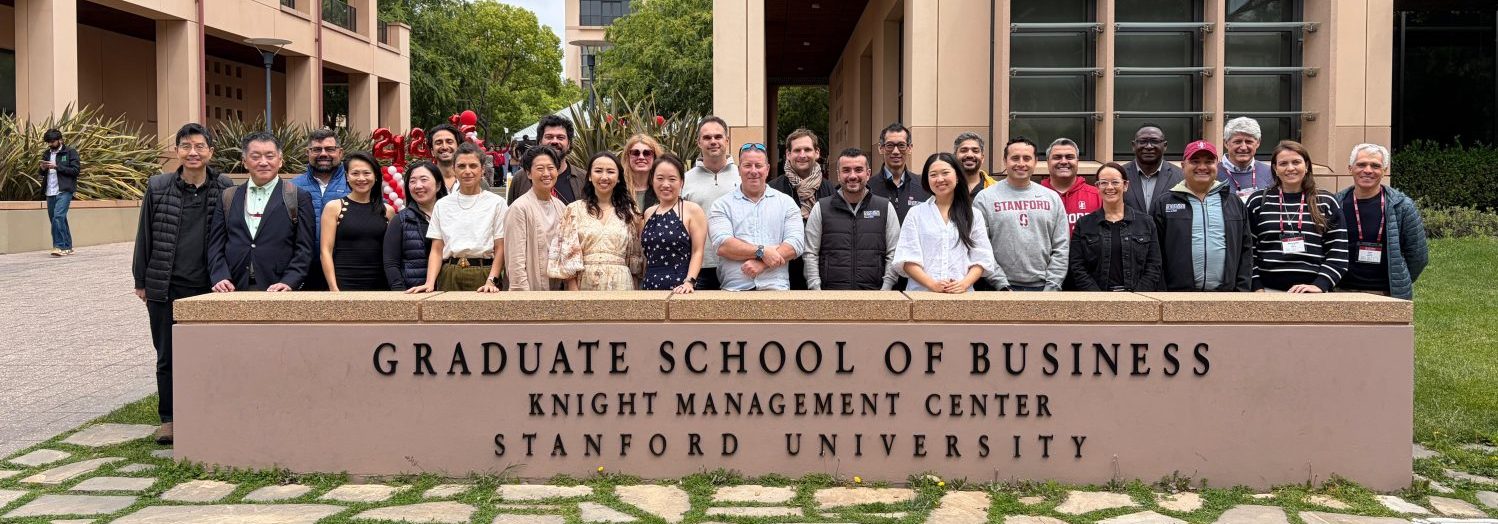
This weekend, I attended my 20-year reunion at Stanford. As I crossed that threshold, I felt a wave of anxiety. This wasn’t just another gathering, it came at a pivotal moment in my life. Turning 50 has a way of bringing invisible checklists with it… questions about what we’ve achieved, what we’ve become, and whether it was enough.
But something unexpected happened.
Instead of pressure, I found calm. Instead of comparison, I found connection.
People were more relaxed, more open, more human. It wasn’t about networking anymore, it was about sharing. Yes, we were all a bit heavier, balder, and more wrinkled… but the spark was still there. The same energy in the eyes. The same desire to build, to change, to matter.
That’s what makes this group special—even after 20 years.
And it left me with a few reflections that honestly surprised me.
1. The most important decisions are not the ones you think: If you are anything like me (and I hope you are not), you have probably spent years thinking about career decisions: what job to take, which industry to choose, whether to go for a startup or stay in corporate, how much to earn. These decisions matter, but nothing comes close to choosing who your partner will be and where you will live. I saw incredibly successful classmates going through painful divorces, questioning decades of their lives. Others realized too late that they spent years in places that never felt like home and are now trying to return, reconnect, and recover time. Your partner will shape your happiness far more than any job, and your happiness will shape your success. Choose carefully who you want next to you for the long term, whether you want the same kind of life, the same place, the same family. This decision will echo much more than any other.
2. Take care of your body—it shows: After 20 years, something interesting happens. People do not ask how much money you made; they ask how you stayed in shape. And honestly, it was noticeable. Many were struggling physically, out of breath after small efforts, carrying the weight of years of neglect. This is not about appearance. It is about energy, presence, and how you show up in life. Taking care of yourself is one of the few things that truly compounds over time, and after 20 years, the difference is clear.
3. Most of us end up somewhere in the middle, and that is okay: We all left thinking we would do something extraordinary. And a few did—the COO of Meta, the founder of Zillow, early employees in iconic companies. But they are the exception. Most of us ended up somewhere in the middle. Corporate roles, finance, consulting, startups with mixed outcomes, all leading to fairly similar places. And that is not a bad outcome. Outliers will always exist, but they are a very small percentage. If you compare yourself to them, you will always feel behind. If you compare yourself to your own path, you will realize you are doing just fine. Most of us will land in a good place, so maybe the real question is how much we enjoy the journey there.
4. Be open to the “cuckoos.”: Yes, after 20 years, some people look a little crazy, and that is not a bad thing. Some found their true passions, others are still searching, and some took paths that do not make sense to anyone else. But in reality, we are all trying to find our place in the world. And that place looks different for everyone. So instead of judging the ones who seem different, be open to them. They might be closer to finding what matters to them, or they might still be exploring. Either way, there is something to learn there.
5. Luck will play a key role in your opportunities: After talking with many classmates, it became clear that luck was always part of their journey. In many cases, it was a job offer that didn’t materialize that led them to a much better opportunity, or a startup that went on to achieve enormous success. In other cases, they were simply in the right place at the right time. This only means one thing: you need to be prepared to take advantage of luck—whenever and wherever it presents itself.
6. If you do not find meaning in what you do, you are lost: It does not matter if you are building the next AI company or simply “chopping wood and carrying water.” If it does not mean something to you, you are lost. Many of my classmates are now searching for meaning after years in careers that did not fulfill them. And at 50, that search becomes harder. You are more attached to what you have built, to your identity, to what you know. I saw regret in people who spent years in roles that did not matter to them, working for people they did not respect, pushing projects that were not going anywhere. And yet many keep going, because it is familiar, because it feels safe. But if you do not find meaning in what you do, leave as soon as you can. Find the place where you can be yourself and where your work matters to you. Because in the end, most of us will land somewhere in the middle anyway, so you might as well make that journey meaningful.
I wish someone had told me these things 20 years ago. It would have saved me time, energy, and probably a few wrong turns.
But looking back, it has still been an amazing ride.
What about you? Where are you today?
Juan

